SkinCeuticals Retinol 0.3 sits in an awkward middle ground for younger users dealing with breakouts, and the question of whether it actually helps with teenage cystic acne is more nuanced than most product pages admit. The short answer to the skinceuticals retinol 0.3 teens cystic hormonal acne question: the formula is gentle enough that many dermatologists will green-light it off-label for a 15-to-18-year-old with mild-to-moderate breakouts, but it is not a substitute for prescription therapy when the cysts are genuinely nodular, painful, and scarring. This guide breaks down when 0.3 is appropriate, when teens should escalate to a derm, how to layer it without inflaming hormonal acne further, and which gentler luxury and pharmacy-tier alternatives perform similarly in real households.
Is SkinCeuticals Retinol 0.3 actually appropriate for teen skin?
SkinCeuticals Retinol 0.3 was originally formulated as an entry-level retinoid for adult anti-aging, but its stabilized 0.3% pure retinol concentration falls in a sweet spot that several pediatric and adolescent dermatologists now recommend off-label. The reason it gets picked for younger skin is the formulation itself: pure retinol stabilized in an airless pump, paired with a soothing base of bisabolol and a small fraction of glycerin, which translates to less of the stinging, peeling, and barrier wreckage that prescription tretinoin can cause when a 16-year-old tries to push through the purge phase alone.
That said, "early cystic" acne is a category that needs clarification. True cystic acne — large, deep, painful lesions that last three or more weeks and often scar — is an inflammatory, frequently hormonal condition that rarely responds to topical retinol alone. If a teen has these, the first stop is a dermatologist who can evaluate hormonal workups, topical or oral antibiotics, spironolactone (for older teen girls), or in severe cases isotretinoin. SkinCeuticals 0.3 is best positioned for what most parents and teens actually call "early cystic" — recurring papules and pustules with the occasional deeper nodule along the jawline and chin, typically flaring around the menstrual cycle.
How 0.3% strength compares to other teen-friendly retinoids
Teens with hormonal breakouts almost always do better with stabilized, encapsulated, or buffered retinoids than with raw high-percentage formulas. The table below compares SkinCeuticals' positioning against five widely-available alternatives that get recommended in the same context.
| Product | Retinoid strength | Best teen scenario | Barrier impact |
|---|---|---|---|
| SkinCeuticals Retinol 0.3 | 0.3% pure retinol | Ages 16-18, persistent papules with cyclical flares | Moderate, well-buffered |
| La Roche-Posay Pure Retinol | ~0.3% with niacinamide | Sensitive teen skin, redness-prone | Low |
| CeraVe Encapsulated Retinol | Time-released, low % | Younger teens (14-15) just starting | Very low |
| The Ordinary Retinol 0.2% in Squalane | 0.2% in squalane base | Budget routines, oilier skin | Low to moderate |
| Anua Retinol 0.3% | 0.3% with 5% niacinamide | Congestion plus early post-acne marks | Low |
| Paula's Choice 0.3% Retinol + Bakuchiol | 0.3% + 2% bakuchiol | Teens reactive to pure retinol | Very low |
How to start SkinCeuticals 0.3 (or any 0.3% retinol) on teen skin
The single biggest reason teens fail at retinol is starting too fast. The correct on-ramp for a teen with early hormonal cystic breakouts is twice a week for the first month, three times a week for the second month, and only moving to nightly application if the skin shows zero peeling, redness, or worsening cysts. Always apply to fully dry skin (damp or wet skin amplifies absorption and irritation), use no more than a pea-sized amount for the entire face, and follow with a ceramide-rich moisturizer. The "sandwich method" — moisturizer, then retinol, then moisturizer — is genuinely useful for teens whose skin barrier is still developing and whose oil glands are in flux.
Sunscreen is non-negotiable. Retinol thins the stratum corneum during the adjustment phase, and teen skin already exposed to school sports, beach trips, and inconsistent SPF compliance is at real risk of post-inflammatory hyperpigmentation, which can outlast the active acne by years. For a deeper look at how to layer retinoids correctly, see our guide on incorporating retinol into nighttime skincare and the most common mistakes people make with luxury skincare routines.
Top retinol picks for teens with early hormonal cystic acne
La Roche-Posay Pure Retinol Face Serum with Niacinamide
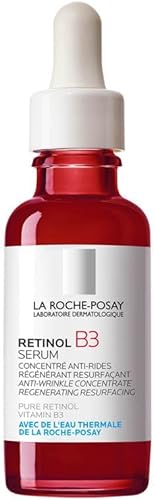
If a parent wants the closest pharmacy-tier equivalent to SkinCeuticals Retinol 0.3 without the luxury price tag, La Roche-Posay's pure retinol serum is the answer. It pairs gradual-release retinol with niacinamide — which is genuinely useful for hormonal breakouts because it calms inflammation and helps regulate sebum — and adds hyaluronic acid for hydration. It is dermatologist-tested for sensitive skin, which matters when a teen's face is already reactive from active cysts. Apply two nights per week for the first month. Check La Roche-Posay Pure Retinol on Amazon.
CeraVe Anti Aging Retinol Serum (Encapsulated)
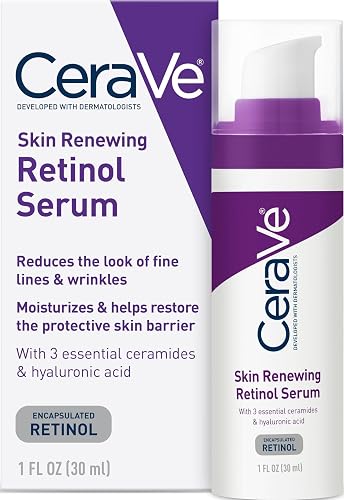
For a 14- or 15-year-old whose skin is still in flux but who needs something to address congestion before it scars, encapsulated retinol is the smarter entry point than pure retinol. CeraVe's version uses time-released microcapsules that slowly deliver retinol over hours rather than minutes, dramatically reducing the chance of peeling, redness, and the dreaded "retinol cliff" where the face goes from fine to flaking overnight. The ceramide-and-niacinamide base supports a still-developing barrier, and the fragrance-free formula avoids the perfumed bases that aggravate cystic skin. It is also the most affordable serious option on this list, which matters for routines that may change every few months. View CeraVe Encapsulated Retinol on Amazon.
Anua Retinol Serum 0.3% with 5% Niacinamide
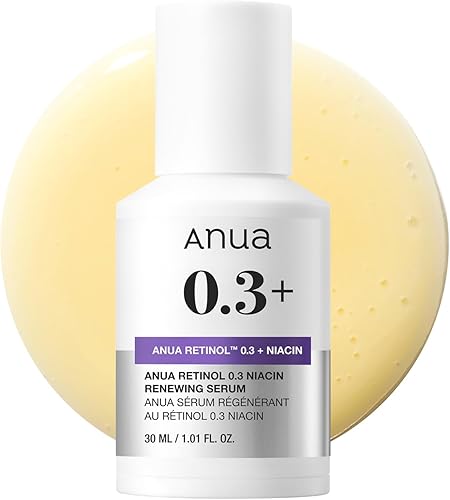
Anua's K-beauty 0.3% retinol is a direct strength match to SkinCeuticals and includes 5% niacinamide — a higher percentage than most Western counterparts. For teens with the cyclical jawline pattern typical of early hormonal cystic acne, the niacinamide load helps temper post-flare redness and supports faster recovery between breakouts. The formulation is specifically positioned for beginners, with a fragrance-free, low-pH base that respects sensitive teen skin and avoids the alcohol-heavy carriers that sting on inflamed cysts. See Anua Retinol 0.3% on Amazon.
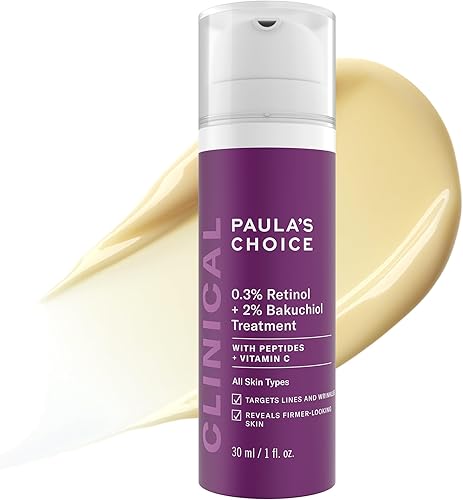
Paula's Choice CLINICAL 0.3% Retinol + 2% Bakuchiol
If a teen's skin reacted poorly to a first attempt at retinol — burning, peeling sheets, worsening cysts — the Paula's Choice 0.3% retinol with 2% bakuchiol is the most forgiving 0.3% option on the market. Bakuchiol mimics some retinoid signaling without the irritation profile, which means a teen can ramp up to nightly use within a few weeks instead of stretching the adjustment over months. The added ceramides and antioxidant blend (vitamins C and E) also make it a more complete formula than the SkinCeuticals 0.3 base, which leans minimalist. Check Paula's Choice 0.3% Retinol on Amazon.
The Ordinary Retinol 0.2% in Squalane
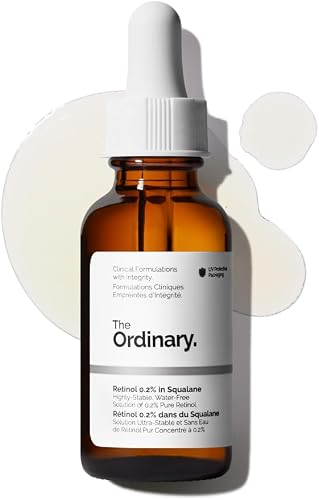
For a teen with oilier skin and a tight budget, The Ordinary's 0.2% in squalane is the lowest-friction starting point. The squalane base mimics natural sebum, which oddly enough makes it well-tolerated by oily skin types because it does not trigger compensatory oil production the way petrolatum-heavy bases can. Use this two nights per week and step up to the 0.5% formulation only after three full months of zero irritation. View The Ordinary Retinol 0.2% on Amazon.
What SkinCeuticals 0.3 will not do for hormonal cystic acne
Retinol — at any strength — does not directly treat the hormonal driver of cystic breakouts. If a teen's cysts are clearly tied to the menstrual cycle and concentrated on the chin and jaw, topical therapy is supportive, not curative. Spironolactone (for cisgender teen girls and women), combined oral contraceptives, and in severe cases isotretinoin are the treatments that actually address the underlying hormonal cascade. SkinCeuticals 0.3 will help prevent the dead-skin congestion that worsens cysts, reduce post-inflammatory marks faster, and improve overall skin texture and tone — but it will not stop cysts from forming if hormones are the root cause.
The other thing 0.3 will not do is work on a fast timeline. The realistic timeline for visible improvement in the skinceuticals retinol 0.3 teens cystic hormonal acne use case is 10 to 14 weeks. Teens who quit at week four because they "saw no change" are quitting just before the inflection point. If you want broader context on what retinol can and cannot do, see retinol myths vs facts. For teens specifically dealing with acne-prone routines, our roundup of best retinol night treatments for acne-prone skin in 2026 covers more options at every price point.
Frequently Asked Questions
What age can a teen safely start SkinCeuticals Retinol 0.3?
Most dermatologists are comfortable with topical 0.3% retinol starting around ages 14 to 16, provided the skin is not actively eczematous or rosacea-prone. Younger teens (under 14) with breakouts usually do better with benzoyl peroxide, salicylic acid, or adapalene 0.1% — the latter of which is the only retinoid actually FDA-approved over the counter for adolescent acne.
Is adapalene a better choice than SkinCeuticals Retinol 0.3 for teen cystic acne?
For purely acne-focused care, yes — adapalene (Differin 0.1%) has stronger acne-clearance data and is FDA-approved for adolescent acne starting at age 12. SkinCeuticals 0.3 has the edge on overall skin quality, texture, and post-acne marks. Many teens use adapalene three nights a week and a buffered retinol like 0.3 on the other nights, but this kind of stacking should always be coordinated with a dermatologist.
Will SkinCeuticals 0.3 make hormonal cysts worse during the first month?
It can. A retinoid "purge" is real and most pronounced in the first four to six weeks, during which microcomedones already forming beneath the surface come to a head faster. This looks like worsening, but it is acceleration of breakouts that were already on the way. If a teen develops new cysts in completely different areas of the face — temples, hairline — that is irritation, not purge, and the product should be discontinued.
Can a teen use SkinCeuticals Retinol 0.3 with benzoyl peroxide?
Not in the same routine. Pure retinol degrades on contact with benzoyl peroxide, neutralizing both products. The standard fix is benzoyl peroxide cleanser or spot treatment in the morning and retinol at night. Some encapsulated retinols (like CeraVe's) are stable enough to layer with BPO, but pure-retinol products like SkinCeuticals 0.3 are not.
How long until a teen sees results on cystic breakouts?
Expect texture and post-acne mark improvement around weeks 6 to 8, and a measurable drop in active cyst frequency around weeks 10 to 14. Hormonal cycles often interrupt this timeline — a flare during the premenstrual window is not a sign the retinol is failing. Evaluate the trend across three full cycles, not week to week.
What moisturizer should teens use with 0.3% retinol?
A ceramide-based, non-comedogenic moisturizer is ideal. Skip heavy facial oils (coconut, cocoa butter, shea-heavy balms) which can trigger comedones in teen skin. A hyaluronic acid serum layered under a light ceramide cream provides hydration without congesting the pores that are already inflamed from cystic activity.
Does a teen need SPF if they only use retinol at night?
Yes. Retinol-thinned stratum corneum is more vulnerable to UV damage and to post-inflammatory hyperpigmentation, which is the brown or purple mark a healed cyst leaves behind. Untreated PIH on retinol-thinned skin can take 6 to 18 months to fade. Daily mineral SPF 30 or higher is non-negotiable, especially for the skinceuticals retinol 0.3 teens cystic hormonal acne use case where post-acne marks are often the primary cosmetic concern.
Final guidance for parents and teens
SkinCeuticals Retinol 0.3 is a reasonable, dermatologist-respected entry point for teens dealing with early hormonal breakouts, but it works best as one component of a multi-front plan: dermatologist consultation for any genuine cystic activity, gentle cleansing, ceramide moisturization, daily SPF, and patience across multiple hormonal cycles. The alternatives reviewed above — La Roche-Posay, CeraVe, Anua, Paula's Choice, and The Ordinary — all offer comparable retinoid efficacy at lower cost or with gentler tolerability profiles, and any one of them is a legitimate substitute if the SkinCeuticals price tag, formulation, or strength doesn't suit a particular teen's skin.
Key Takeaways
- Choosing the right skinceuticals retinol 0.3 teens cystic hormonal acne means matching capacity and output ports to your actual devices
- Always check actual watt-hours (Wh), not just watts — runtime depends on Wh, not peak output
- Also covers: skinceuticals retinol teenager acne
- Also covers: low strength retinol teen breakouts
- Also covers: retinol 0.3 hormonal cystic acne
- Compare price-per-Wh across models to find the best value for your budget